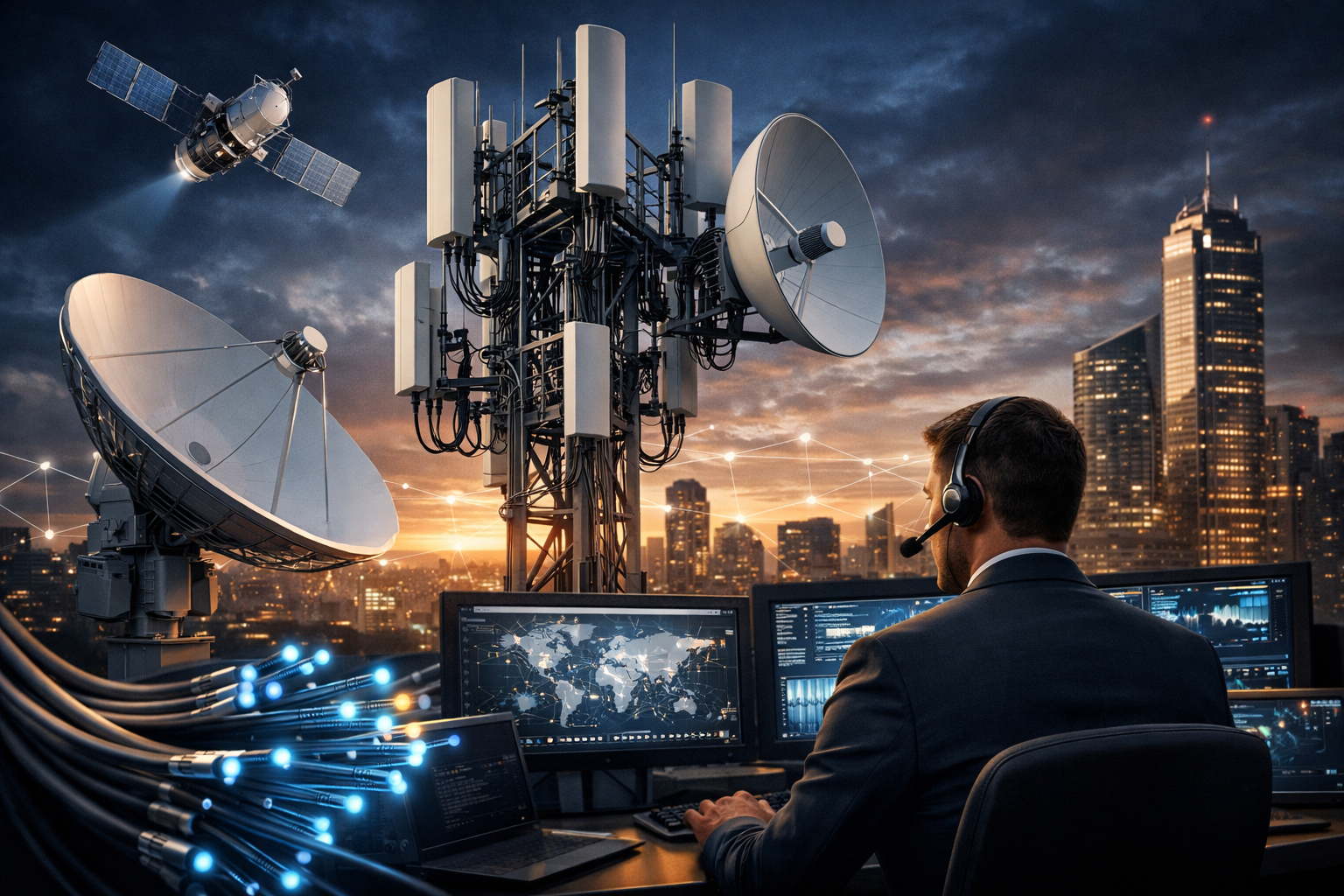
What Is Telecom? A Comprehensive Guide to Telecommunications
## Introduction
Telecommunications, commonly shortened to **telecom**, refers to the transmission of information over long distances through electronic means. It is one of the most important pillars of the modern digital world, enabling people, businesses, and governments to communicate instantly regardless of geographical boundaries. Whether you are making a phone call, sending a text message, browsing the internet, participating in a video conference, or streaming your favorite movie, you are relying on telecommunications technology.
Over the past century, the telecom industry has evolved from simple wired telephone systems into a sophisticated global network powered by fiber optics, satellites, wireless communication, and cloud technologies. Today, telecommunications play a central role in economic development, education, healthcare, entertainment, finance, transportation, and virtually every aspect of daily life.
This article provides a comprehensive overview of telecom, explaining its meaning, history, components, technologies, services, benefits, challenges, and future trends.
---
# What Is Telecom?
Telecom, or telecommunications, is the exchange of information between two or more parties using electronic devices and communication networks. Information can be transmitted in various forms, including:
* Voice
* Data
* Images
* Videos
* Text messages
* Multimedia content
Telecommunications systems use electrical signals, radio waves, optical fibers, microwave transmissions, or telecommunications satellite communications to transfer information quickly and accurately across local, national, and international distances.
In simple terms, telecom allows people and devices to communicate without needing to be physically present in the same location.
---
# The History of Telecommunications
Understanding telecom becomes easier when looking at its historical development.
## 1. Telegraph Era
The first major breakthrough in telecommunications came with the invention of the electric telegraph during the 19th century. Messages could now travel hundreds of miles within minutes instead of days or weeks.
Samuel Morse introduced Morse Code, allowing messages to be transmitted using electrical signals.
---
## 2. Telephone Revolution
Alexander Graham Bell patented the telephone in 1876, forever changing communication.
For the first time, people could speak directly with someone located miles away.
Telephone networks rapidly expanded worldwide and became the foundation of modern telecom systems.
---
## 3. Radio Communication
Wireless communication emerged during the early 20th century.
Radio technology eliminated the need for physical wires and enabled communication across oceans, military operations, aviation, and broadcasting.
---
## 4. Television Broadcasting
Television represented another milestone by combining audio and visual communication.
Broadcasting technologies allowed information and entertainment to reach millions of households simultaneously.
---
## 5. Internet Age
The development of the internet transformed telecommunications more than any previous innovation.
Today, internet-based communication includes:
* Video conferencing
* Instant messaging
* Cloud computing
* Social media
* Online gaming
* Streaming platforms
---
## 6. Mobile Communications
The introduction of mobile phones revolutionized personal communication.
Generations of mobile technology have evolved continuously:
* 1G – Analog voice
* 2G – Digital voice and SMS
* 3G – Mobile internet
* 4G LTE – High-speed broadband
* 5G – Ultra-fast communication with low latency
Research on 6G networks is already underway.
---
# Main Components of a Telecom System
Every telecommunications network consists of several essential components.
## 1. Transmitter
The transmitter converts information into electronic signals suitable for transmission.
Examples include:
* Smartphones
* Computers
* Radio stations
* Television stations
---
## 2. Transmission Medium
Signals travel through various communication channels such as:
* Copper cables
* Fiber optic cables
* Radio waves
* Satellite links
* Microwave links
---
## 3. Receiver
The receiver converts incoming electronic signals back into understandable information.
Examples include:
* Mobile phones
* TVs
* Computers
* Routers
---
## 4. Communication Protocols
Protocols define how information is transmitted between devices.
Common protocols include:
* TCP/IP
* HTTP
* HTTPS
* FTP
* SMTP
These standards ensure compatibility between billions of connected devices worldwide.
---
# Types of Telecommunications
Telecommunications can be categorized into several major types.
## Wired Telecommunications
Wired communication uses physical cables.
Examples include:
* Landline phones
* Fiber internet
* Ethernet networks
* Cable television
Advantages include:
* Stable connections
* High speed
* Excellent reliability
---
## Wireless Telecommunications
Wireless communication transmits information through radio waves.
Examples include:
* Cellular networks
* Wi-Fi
* Bluetooth
* Satellite internet
Wireless communication offers mobility and convenience.
---
## Satellite Telecommunications
Satellites enable communication across vast geographical regions.
Applications include:
* GPS navigation
* Television broadcasting
* Global internet services
* Military communications
* Disaster recovery
---
## Optical Telecommunications
Fiber optic technology uses light instead of electricity.
Benefits include:
* Extremely high bandwidth
* Faster speeds
* Low signal loss
* Better security
* Long-distance transmission
Fiber optics now serve as the backbone of the global internet.
---
# Telecom Services
Telecommunications companies provide numerous services.
## Voice Services
Traditional phone calls remain an important telecom service despite the growth of internet communication.
Examples include:
* Landline calls
* Mobile calls
* VoIP (Voice over Internet Protocol)
---
## Internet Services
Internet connectivity has become the primary telecom service.
Services include:
* Home broadband
* Business internet
* Mobile internet
* Fiber connections
* Satellite internet
---
## Television Services
Telecom providers often deliver television through:
* Cable TV
* IPTV
* Satellite TV
* Streaming integration
---
## Cloud Communication
Businesses increasingly rely on cloud telecom solutions.
Examples include:
* Cloud PBX
* Virtual phone systems
* Unified communications
* Video meetings
---
## Messaging Services
Messaging includes:
* SMS
* MMS
* Instant messaging
* Business messaging
* Verification codes
---
# Telecom Infrastructure
Modern telecom networks depend on extensive infrastructure.
Major components include:
* Data centers
* Cellular towers
* Fiber optic networks
* Switching centers
* Routers
* Internet exchanges
* Satellites
* Undersea cables
Thousands of kilometers of submarine fiber optic cables connect continents and carry the majority of global internet traffic.
---
# Telecom Networks
Telecommunications networks vary according to coverage area.
## PAN (Personal Area Network)
Short-range communication around a single individual.
Examples:
* Bluetooth devices
* Smartwatches
* Wireless headphones
---
## LAN (Local Area Network)
A local network connecting devices inside:
* Homes
* Offices
* Schools
---
## MAN (Metropolitan Area Network)
Covers an entire city or metropolitan area.
Often used by municipalities and universities.
---
## WAN (Wide Area Network)
Wide Area Networks connect countries and continents.
The internet is the largest WAN ever created.
---
# Mobile Telecom Technologies
Mobile communication has evolved significantly.
## 2G
Introduced digital voice communication and text messaging.
---
## 3G
Added mobile internet capabilities.
Enabled:
* Mobile browsing
* Video calls
* Multimedia services
---
## 4G LTE
Provided broadband internet speeds suitable for:
* HD streaming
* Online gaming
* Video conferencing
---
## 5G
5G introduces:
* Gigabit speeds
* Ultra-low latency
* Massive IoT connectivity
* Smart city applications
* Autonomous vehicle support
---
# The Role of Telecom in Business
Businesses rely heavily on telecommunications.
Major business applications include:
* Customer service
* Video conferencing
* Remote work
* Cloud computing
* E-commerce
* Data sharing
* Supply chain management
* Digital marketing
Without telecom infrastructure, global business operations would be nearly impossible.
---
# Telecom in Healthcare
Healthcare has benefited enormously from telecommunications.
Applications include:
* Telemedicine
* Remote patient monitoring
* Medical imaging transfer
* Electronic health records
* Emergency communication
Doctors can now diagnose and consult patients from different cities or countries.
---
# Telecom in Education
Education has become increasingly digital.
Telecom enables:
* Online learning
* Virtual classrooms
* Digital libraries
* Educational videos
* Distance education
* International collaboration
Millions of students now access educational resources from anywhere in the world.
---
# Telecom and Smart Cities
Smart cities depend heavily on telecommunications.
Examples include:
* Smart traffic systems
* Smart lighting
* Connected surveillance
* Environmental monitoring
* Public Wi-Fi
* Intelligent transportation
Telecom networks form the digital foundation of urban innovation.
---
# Internet of Things (IoT)
IoT refers to interconnected devices that communicate automatically.
Examples include:
* Smart homes
* Smart thermostats
* Connected vehicles
* Wearable devices
* Industrial sensors
* Agricultural monitoring
Reliable telecom infrastructure is essential for IoT growth.
---
# Artificial Intelligence in Telecom
Artificial Intelligence is transforming telecommunications.
AI applications include:
* Network optimization
* Predictive maintenance
* Customer support chatbots
* Fraud detection
* Traffic management
* Cybersecurity monitoring
AI improves both operational efficiency and customer experience.
---
# Cybersecurity in Telecom
Telecommunications networks face numerous security threats.
Common threats include:
* Data breaches
* Malware
* Phishing attacks
* DDoS attacks
* Identity theft
* Network intrusions
Telecom providers invest heavily in:
* Encryption
* Firewalls
* Multi-factor authentication
* Security monitoring
* Threat intelligence
Protecting customer data remains a top priority.
---
# Advantages of Telecommunications
Telecom offers countless benefits.
## Faster Communication
People can communicate instantly across the globe.
## Economic Growth
Telecommunications support businesses, innovation, and international trade.
## Global Connectivity
People remain connected regardless of location.
## Improved Productivity
Businesses collaborate efficiently using digital communication tools.
## Better Emergency Response
Emergency services rely on telecom networks for rapid coordination.
## Educational Opportunities
Students gain access to worldwide educational resources.
## Healthcare Access
Remote healthcare reaches underserved communities.
---
# Challenges Facing the Telecom Industry
Despite tremendous progress, telecom companies face several challenges.
## High Infrastructure Costs
Building nationwide fiber and 5G networks requires massive investments.
---
## Cybersecurity Risks
Increasing connectivity creates additional attack surfaces.
---
## Regulatory Compliance
Telecom providers must comply with national and international regulations.
---
## Network Congestion
Growing internet usage places significant pressure on communication networks.
---
## Rapid Technological Change
Telecom companies must continuously upgrade infrastructure to remain competitive.
---
# Future Trends in Telecommunications
The telecom industry continues evolving rapidly.
Key future trends include:
### 6G Networks
Future networks may provide speeds far beyond 5G while enabling immersive virtual experiences.
### AI-Driven Networks
Artificial intelligence will automate network management and optimization.
### Edge Computing
Processing data closer to users reduces latency and improves application performance.
### Quantum Communication
Quantum technologies promise unprecedented levels of communication security.
### Satellite Internet Expansion
Low Earth Orbit (LEO) satellite constellations will provide internet access to remote regions worldwide.
### Sustainable Telecom
Telecom companies are increasingly adopting renewable energy and energy-efficient infrastructure to reduce environmental impact.
---
# Career Opportunities in Telecom
The telecommunications sector offers a wide range of career paths, including:
* Network Engineer
* Telecommunications Engineer
* RF Engineer
* Fiber Optic Technician
* Cybersecurity Specialist
* Cloud Communications Engineer
* Systems Administrator
* Network Architect
* Technical Support Engineer
* Telecom Project Manager
* Data Center Engineer
As digital transformation accelerates, demand for skilled telecom professionals continues to grow across industries.
---
# Why Telecom Matters in Everyday Life
Many people interact with telecom services dozens or even hundreds of times each day without realizing it. Unlocking a smartphone, making a mobile payment, joining an online meeting, using GPS navigation, ordering food through an app, or streaming music all depend on telecommunications infrastructure operating behind the scenes.
Reliable telecom networks also play a critical role during emergencies, enabling first responders, hospitals, and government agencies to coordinate quickly. In addition, they support financial systems, transportation networks, public utilities, and critical infrastructure that modern societies depend on every day.
---
# Conclusion
Telecommunications are the invisible foundation of our connected world. From the earliest telegraph systems to today's advanced 5G networks and future 6G innovations, telecom has continually transformed the way people communicate, learn, work, conduct business, and access essential services.
As technologies such as artificial intelligence, the Internet of Things, cloud computing, edge computing, and satellite communications continue to evolve, the importance of telecommunications will only increase. Organizations and individuals alike depend on secure, fast, and reliable communication networks to remain productive and competitive in an increasingly digital economy.
Understanding what telecom is—and how it works—provides valuable insight into one of the world's most influential industries. As the sector continues to innovate, telecommunications will remain at the heart of global connectivity, driving technological progress and shaping the future of communication for generations to come.